Miniature portrait of Caroline Beaufort
The miniature portrait of Caroline Beaufort is a small, painted likeness of Victor Frankenstein's mother, a woman whose death from scarlet fever after nursing Elizabeth Lavenza left a permanent void in the Frankenstein household. The portrait is first mentioned as a treasured possession that the young William Frankenstein, Victor's youngest brother, begged to wear on the evening of his murder. Elizabeth Lavenza, who had been caring for the child, reluctantly allowed him to take the miniature, and it was this very object that the monster, after strangling William, removed from the boy's body and later planted on the sleeping Justine Moritz, framing her for the crime.
The Portrait as Evidence in Justine's Trial
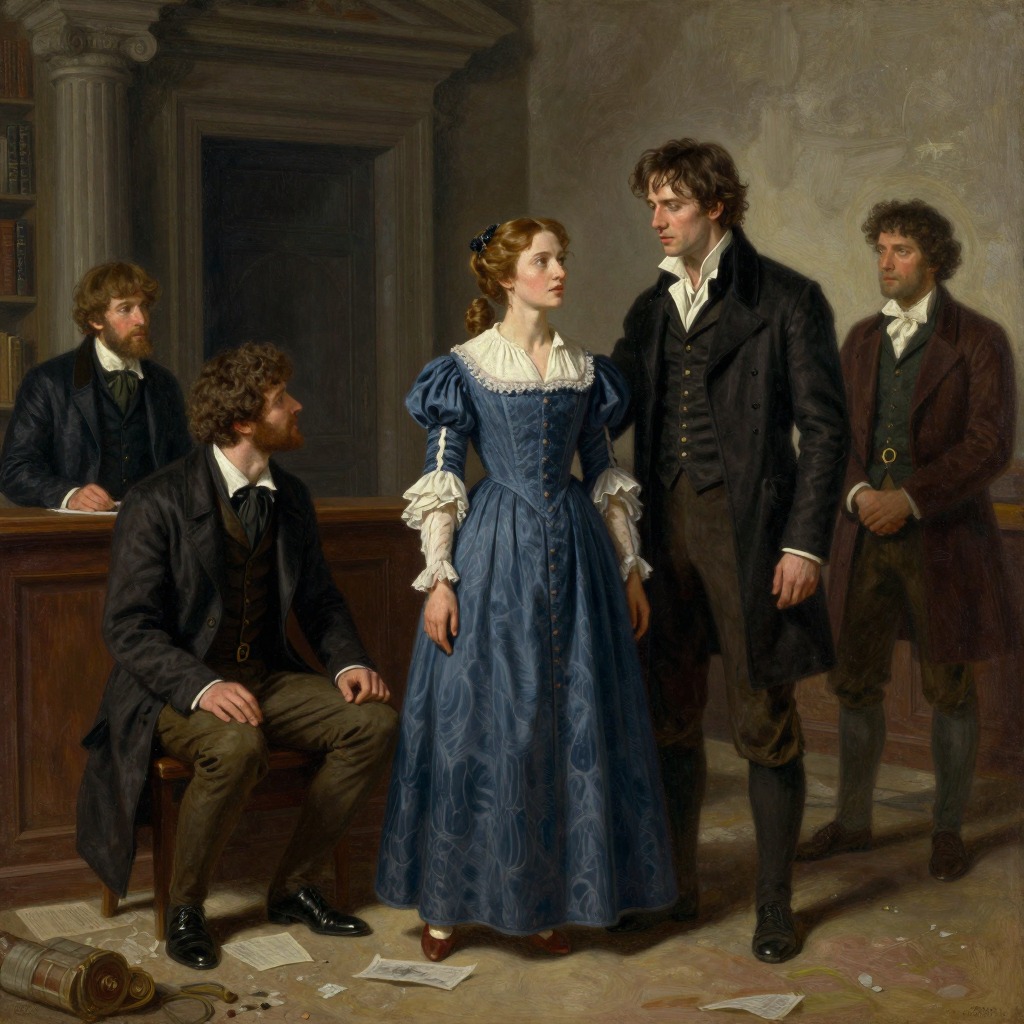
The miniature portrait became the central piece of circumstantial evidence in Justine Moritz's trial for the murder of William Frankenstein. A servant, examining the clothes Justine had worn on the night of the murder, discovered the portrait in her pocket. The servant immediately showed it to another, who, without informing the family, went to a magistrate, and upon their deposition Justine was apprehended. When Elizabeth, in a faltering voice, testified that the miniature was the same one she had placed around William's neck an hour before he went missing, a murmur of horror and indignation filled the court. Justine, unable to explain how the portrait came to be in her possession, could only express her utter ignorance of the matter, and this single fact weighed so heavily against her that even her own protestations of innocence and Elizabeth's impassioned defense could not overcome it. The portrait, a symbol of maternal love and family heritage, was thus transformed into an instrument of judicial murder, a tangible link that the monster had forged between himself and the innocent servant.
The Monster's Encounter with the Portrait
After killing William, the monster saw something glittering on the child's breast and took the portrait. Gazing upon the image of a most lovely woman with dark eyes fringed by deep lashes, he felt a momentary softening of his malignity, a fleeting delight in the beauty of the face. But this feeling quickly curdled into rage as he remembered that he was forever deprived of the delights that such beautiful creatures could bestow, and that the woman whose resemblance he contemplated would, if she saw him, change her air of divine benignity to one of disgust and affright. Transported by this fury, he then entered a barn where a young woman was sleeping and, in a calculated act of revenge, placed the portrait securely in one of the folds of her dress, thereby sealing Justine's fate. The portrait thus became the monster's chosen weapon, a means to transfer his own guilt onto another and to ensure that his creator would suffer the loss of yet another innocent.
The Portrait as a Symbol of Lost Domestic Happiness
For Victor Frankenstein, the miniature portrait of his mother was a constant reminder of the peaceful, loving home he had destroyed. When he returned to his father's house after William's murder, he gazed upon the picture of his mother, which stood over the mantelpiece, painted at his father's desire and representing Caroline Beaufort in an agony of despair, kneeling by the coffin of her dead father. Below this picture was the miniature of William, and Victor's tears flowed when he looked upon it. The portrait of Caroline, with its depiction of grief and loss, foreshadowed the series of tragedies that would consume the Frankenstein family. In his final pursuit of the monster across the frozen north, Victor carried with him a few jewels that had belonged to his mother, a last tangible link to the world of affection and domestic peace that his ambition had annihilated. The portrait, therefore, functions not merely as a plot device but as a concentrated symbol of the irreplaceable human bonds that Victor's transgressive creation has severed, one by one.